Port St. Lucie Septic to Sewer Conversion Lien at Closing
October 15, 2026
October 15, 2026
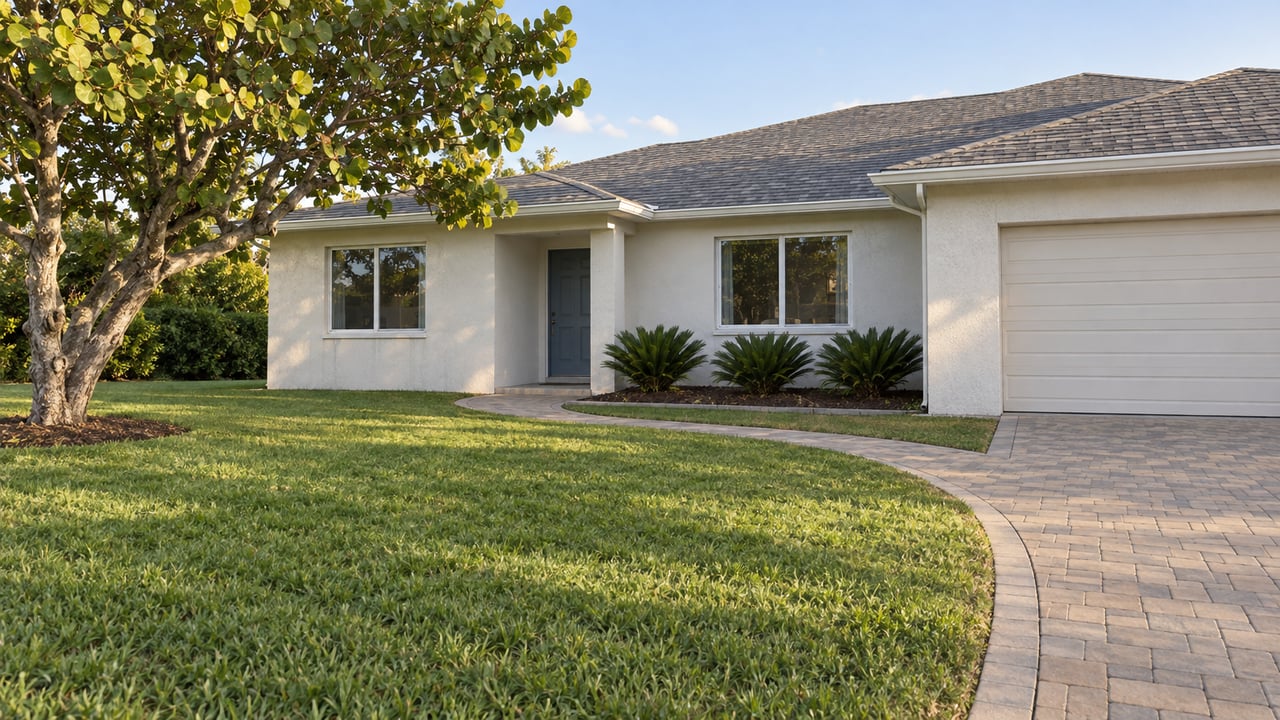
When a Port St. Lucie home has been converted from septic to city sewer, the work is easy to miss from the curb. The city's crew runs a sewer service line, abandons the old septic tank, installs the new low-pressure system and puts down new sod over the disturbed yard. A contracted electrician installs a grinder control box, and that box may be the only visible sign that anything changed.
The financing is harder to miss. If the owner paid with the city's 10-year interest-free plan, the conversion left a document in St. Lucie County's official records, and that document has to be dealt with when the house sells or refinances. I've lived in Port St. Lucie since 1989, and this is one of the few closing costs I know of that comes from a city utility decision made years before anyone listed the home.
The city's online conversion application states it plainly. Choosing the 10-year interest-free loan "creates a lien against the property" and requires a $45.50 recording fee plus a water or sewer deposit. The city's Lien Services division names the result. Connection costs "can be amortized through a 10-year interest-free loan, which becomes the utility capital charge lien."
The recorded document is called a Capital Charge Installment Payment Agreement. Every owner signs it, and the signatures are notarized when the owner chooses the payback program. The financing has no interest and no financial qualification requirements. That makes it the easiest way to pay for a conversion, so a lot of converted homes probably still have a balance.
The city has been doing these conversions since 1999. Its utilities plan counts 11,345 completed conversions since then. As of March 31, 2026, it also counts 12,264 septic systems still inside city limits, with a target of 400 conversions a year for FY 2025/26 and FY 2026/27. At that pace, converting every remaining system would take about three decades. Each financed conversion adds a lien that lasts up to ten years. These agreements have been part of resales in the older parts of the city for a long time, and the numbers say they will keep turning up for a long time.
This is the main reason the lien catches people off guard. The city's public lien search is labeled "Search All Liens (except Utility Systems)." If you run that search and get a clean result, you have only learned that the address has no code, building or nuisance liens. You have learned nothing about a sewer conversion balance.
For utility capital charge information, the city points you to three other places:
The city also warns that its own records "may not have all liens or assessments on a property" and directs people to county records for everything that has been recorded. If you're selling, it's easy to find out early. A phone call before listing tells you whether there's a balance and roughly how big it is. Otherwise you may hear about it from the title company a week before closing.
The city's Subordination & Assumption page and its online assumption form describe the options. The form asks for the capital-charge payoff amount along with the buyer's and seller's names, which shows that payoff and assumption are both normal ways to handle it.
The city's materials don't say whether a sale requires payoff when nobody arranges an assumption. Ask the city about your specific property and don't assume either way.
An assumption needs more paperwork than you might expect:
The city asks for at least 10 business days to prepare routine agreements. Cases involving trusts, LLCs, lien transfers or changed title commitments can take longer. On a 30-day contract, those 10 business days take up about two weeks of the schedule. If the seller is a trust or LLC, the city says the wait can run longer.
The same question affects sellers still on septic who are thinking about converting before they list, and buyers comparing a septic home with one already on sewer. The cost of converting just went up.
City Council adopted Ordinance 26-86 on September 28, 2026, effective October 1, 2026. The city's announcement says it includes a 3.5% water rate increase and that "Wastewater rates were not increased." That statement covers the monthly wastewater rates. The one-time charge for a septic conversion did go up. The ordinance raised the "Septic Conversion: Grinder System or Step Tank" charge from $4,289 to $5,459.
Here is the full cost of a wastewater-only, low-pressure conversion on the city's October 2026 rate sheet, next to the older figure:
| Source | Paid in full | Due at application | Monthly, 120 payments |
|---|---|---|---|
| City program page, "effective Oct. 1, 2025" | $8,258 | $110 deposit + $45.50 recording | $67.90 |
| Oct. 2026 rate sheet, USA/SAD areas | $9,445 | $155.50 | $78.71 |
| Oct. 2026 rate sheet, Non-USA/SAD areas | $11,417 | $155.50 | $95.14 |
From the old figure to the new USA/SAD figure is an increase of $1,187. The ordinance's increase to the septic conversion charge alone is $1,170. As of early October 2026, the city's conversion program page still shows the $8,258 figure, so a seller who checks it today will see a lower number than the one that applies. The rate sheet charges different amounts for USA/SAD and non-USA/SAD areas but doesn't define those labels. Connection Support can tell you which column applies to a specific address.
Three more rules matter if you're deciding when to convert:
Grant information conflicts. The program page says the city "is no longer accepting grant applications for this program." The October 2026 rate sheet says grants of up to 50% "may be available" on a first-come, first-served basis and tells owners to call Connection Support to check eligibility. Call 772-873-6400 to find out the current status.
If you list soon after converting, the lien will be close to its full original amount, and every monthly payment the seller makes lowers what's left to settle at closing. A buyer who assumes the agreement takes over a fixed, interest-free monthly payment that the city collects through the utility account. A seller who pays it off clears that line from the title commitment entirely.
Converting does end the septic upkeep. The city says that after a home is connected, "the maintenance is managed, and all costs are covered by the City," and that the connection fee also reserves treatment capacity for the home. For any converted home, ask four things: whether there's a balance, how big it is, which option will settle it, and how long the city will need.
State law is a separate issue to check parcel by parcel. Chapter 2026-2, Laws of Florida requires certain commercial properties and residential properties of 10 acres or less in named Indian River Lagoon basin areas to connect to central sewer if available, or to upgrade to a system with at least 65% nitrogen reduction, by July 1, 2030. That rule covers specific basins, not the whole city. For now, the city treats conversion of an existing working system as the owner's choice and requires sewer for new construction.
Does a "clean" city lien search mean there's no sewer balance? No. The city's public search excludes Utility Systems liens. Lien Services at 772-344-4179 and the Clerk's AcclaimWeb portal cover what that search leaves out.
Can a cash buyer assume the agreement? The city lists a $200 assumption fee for cash deals, and an assumption requires an $80 lien search from Lien Services.
If I applied before October 1, which price applies? That depends on your application's status. Applications stay open for 12 months after approval, and an expired one has to be refiled at the rates in effect at that time.
If you're selling a converted home, or weighing a conversion before you list, I'm happy to sit down with your utility bill and the recorded agreement and work out how the balance fits your timeline. Amanda Flesch can help you plan it before a buyer's title company raises it. Let's Connect.
This article is general information, not legal, tax or financial advice. Consult a qualified professional about your situation.
Stay up to date on the latest real estate trends.

One thing relocation buyers sometimes don’t realize is just how geographically spread out Port St. Lucie is.
Trust lifelong Port St. Lucie resident Amanda Flesch to bring clear communication, honest strategy, and local expertise to your next real estate transaction.

AMANDA FLESCH | REMAX GOLD
10850 US-1 Port St. Lucie, FL 34952 760 SE Indian St Stuart, FL 34997